

Warehouse Business Opportunity: How Warehousing and Delivery Work Together
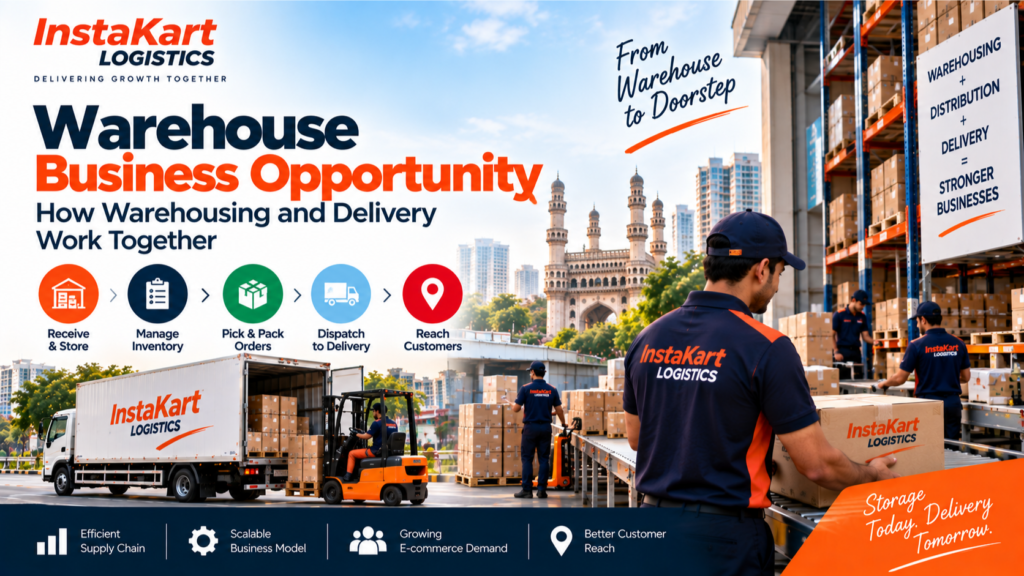
Warehouse Business Opportunity: How Warehousing and Delivery Work Together When people think about logistics, they often imagine delivery vehicles travelling from one place to another. However, delivery is only one part of the larger supply chain. Before a parcel reaches a customer’s doorstep, it may need to be received, stored, sorted, packed, scanned, and prepared for dispatch. This is where warehousing and delivery work together. As e-commerce, retail, manufacturing, and direct-to-consumer businesses continue to expand, efficient warehousing has become increasingly important. For entrepreneurs, this creates an opportunity to explore a warehouse business opportunity that combines storage, distribution, and delivery services. However, starting a warehouse business requires careful planning. Location, space, technology, staffing, transportation, customer demand, and operating costs all need to be considered. Let’s understand how warehousing and delivery connect and why this combination can create opportunities for entrepreneurs. What Is a Warehouse Business? A warehouse business provides space and services for storing, managing, and moving goods. Traditionally, warehouses were mainly used for storage. Today, their role has become much broader. A modern warehouse may handle: In some business models, the warehouse also acts as a local distribution hub. This means products don’t simply stay inside the facility. Instead, they move through the warehouse as part of a larger logistics network. Why Are Warehousing and Delivery Connected? Imagine an online business based in one city that sells products to customers across several areas. The business needs somewhere to keep its inventory. It also needs a way to move each order to the customer. This creates two connected requirements: Warehousing = Where products are managed Delivery = How products reach customers When these functions work together, the process can become more organised. A simplified supply chain looks like this: Supplier → Warehouse → Order Processing → Sorting → Dispatch → Delivery Hub → Customer The warehouse manages the inventory and prepares shipments, while the delivery network handles the movement of those shipments. Therefore, efficient warehousing can directly support efficient delivery. Why Is Warehousing Becoming an Opportunity for Entrepreneurs? Several changes in the business environment are increasing the importance of warehouses. Growth of E-Commerce Online sellers need a place to store their products before orders are received. As order volumes increase, managing inventory from a home, small office, or basic storage room can become difficult. Consequently, e-commerce businesses may look for professional warehousing and fulfilment services. Expansion of D2C Brands Direct-to-consumer businesses are selling products directly through websites, social media, and online marketplaces. These businesses may not want to invest heavily in their own warehouses. Instead, they can work with third-party logistics providers that handle storage and fulfilment. Wider Distribution Networks Businesses are increasingly reaching customers outside their local markets. As a result, products need to be positioned closer to different customer groups. Regional and local warehouses can help support this distribution strategy. Increasing Delivery Expectations Customers have become accustomed to tracking shipments and receiving products at their doorstep. Therefore, businesses need logistics operations that can process orders quickly and hand them over to delivery networks without unnecessary delays. How Does a Warehouse and Delivery Business Work? A warehouse and delivery operation can involve several stages. 1. Receiving Products arrive at the warehouse from suppliers, manufacturers, or businesses. The warehouse team receives and records the goods. 2. Storage Products are placed in organised storage areas. The layout should make it easy for employees to locate products when orders are received. 3. Inventory Management The business keeps track of how many products are available. Digital inventory systems can make this process easier and reduce manual errors. 4. Order Processing When a customer places an order, the required product is identified. The warehouse team then picks and prepares it. 5. Packing The product is packed according to the requirements of the seller and shipment. Proper packaging can help reduce damage during transportation. 6. Sorting Parcels are organised according to destination, route, customer, or delivery service. 7. Dispatch The prepared parcels leave the warehouse and enter the delivery network. 8. Last-Mile Delivery Finally, the parcel reaches the customer’s location. This is the stage where the warehouse operation connects directly with the delivery service. Benefits of Combining Warehousing and Delivery Combining these services can create operational advantages when managed properly. Faster Order Processing When inventory is already stored in a local warehouse, orders can be processed without waiting for products to travel from a distant location. As a result, businesses may be able to prepare shipments more quickly. Better Inventory Management A structured warehouse provides a central location for managing products. This can make it easier to monitor inventory levels and identify which products need replenishment. Efficient Delivery Planning When parcels are sorted before dispatch, delivery teams can organise routes more efficiently. This can help reduce unnecessary movement. Better Customer Experience Faster processing and reliable delivery can contribute to a smoother customer experience. Customers can also benefit from better shipment visibility when tracking systems are available. Opportunity for Multiple Services A warehouse business doesn’t necessarily have to earn revenue only from storage. Depending on the business model, services may include: This can provide multiple potential revenue streams. What Is a Warehouse Franchise? Entrepreneurs who don’t want to build a warehousing business entirely from scratch can explore a warehouse franchise. Under a franchise model, an entrepreneur operates a warehouse or logistics business using an established brand and business framework. Depending on the franchise company, support may include: However, the exact terms differ between companies. Therefore, entrepreneurs should carefully review the investment requirements, territory, responsibilities, fees, revenue structure, support, and agreement terms before making a decision. What Investment Is Required? The investment required for a warehouse business depends on several factors. There isn’t one fixed amount that applies to every business. Important cost components can include: Property Rent, security deposit, utilities, maintenance, and basic improvements can form a significant part of the budget. Warehouse Equipment Depending on the operation, you may need: Staff Employees may be required for receiving, inventory management, packing, sorting, administration, and delivery operations.
Warehouse Business Opportunity: How Warehousing and Delivery Work Together Read More »