

InstaKart Couriers

Courier Franchise

courier franchise in Hyderabad

How Much Does a Courier Franchise in Hyderabad Cost?

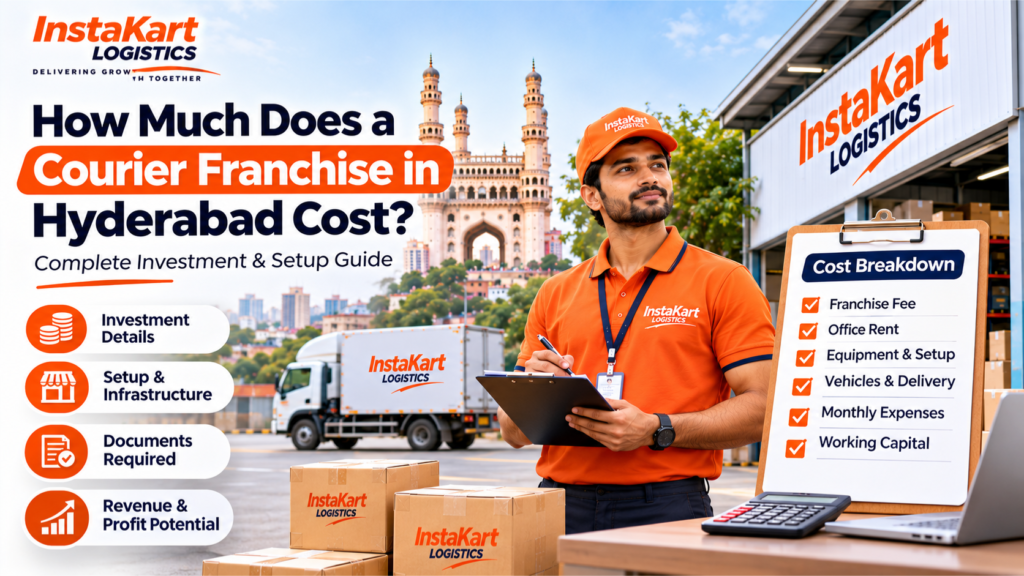
How Much Does a Courier Franchise in Hyderabad Cost? Starting a courier franchise can be an attractive business opportunity for entrepreneurs who want to enter the logistics and delivery industry. With the growth of online shopping, local businesses, and e-commerce sellers, the need for reliable parcel delivery services continues to create opportunities for new businesses. Hyderabad is a city worth exploring for this opportunity. It has a growing business ecosystem, residential communities, retail markets, industrial areas, and online sellers who regularly depend on courier services. However, one important question comes before starting: How much does a courier franchise in Hyderabad cost? The investment depends on the franchise company, office location, business model, infrastructure, staffing, and services you plan to offer. A small courier booking centre may require a relatively modest budget, while a larger branch handling pickups, sorting, and local deliveries will need additional investment. In this guide, we will break down the possible costs, monthly expenses, business requirements, and factors that influence the investment. 1. What Is the Average Cost of a Courier Franchise in Hyderabad? There is no fixed investment amount for every courier franchise. Different companies offer different packages depending on their brand, services, operational support, and franchise requirements. For initial financial planning, you can consider these illustrative investment ranges: Courier franchise model Indicative initial investment Small courier booking centre ₹1 lakh–₹3 lakh Standard courier franchise outlet ₹3 lakh–₹6 lakh Courier hub with pickup and delivery ₹5 lakh–₹10 lakh or more Larger courier and distribution centre ₹10 lakh onwards These are general budgeting estimates, not official quotations from any specific franchise company. Actual investment may be lower or higher depending on the location, franchise fees, equipment, property costs, and operational requirements. Some companies may include software, branding, or training in their packages, while others may charge separately. Therefore, always request a complete written quotation before making a payment. 2. Breakdown of Initial Investment To understand how much money you need, it is useful to divide the investment into different categories. A. Franchise or Registration Fee Some courier companies charge an initial franchise or onboarding fee to allow you to operate under their brand and business model. Depending on the company, this fee may cover: However, not every company includes all these services in its franchise fee. Before paying, ask whether there are additional charges for renewal, security deposits, software, or ongoing support. B. Office Rent and Security Deposit A courier franchise needs a suitable commercial space for parcel booking, customer enquiries, documentation, and shipment handling. Your property-related expenses may include: The rental cost depends on the area, property size, accessibility, and nearby commercial activity. You do not necessarily need a large office to start. A small, accessible space may be sufficient for a basic courier booking centre. C. Furniture and Equipment Your branch will need basic equipment to manage daily courier operations. Common requirements include: The exact equipment depends on the franchise company’s operating system. Avoid purchasing expensive equipment before confirming the franchisor’s specifications. D. Vehicle and Transportation Expenses If your franchise includes parcel pickup and delivery, transportation can become a significant part of your investment. Possible expenses include: Some courier franchise models may use an existing transportation network or third-party delivery partners. In such cases, you may not need to purchase vehicles immediately. Clarify who is responsible for pickup, transportation, and last-mile delivery before signing the agreement. 3. Monthly Operating Expenses Apart from the initial investment, you need enough money to operate the business every month. Here are the common expenses to consider: Expense What it covers Office rent Commercial property rental Salaries Booking staff and delivery executives Fuel Pickup and delivery transportation Electricity Office and equipment usage Internet Tracking and communication Packaging Boxes, tape, labels, and supplies Maintenance Equipment and vehicle repairs Marketing Local promotions and customer acquisition Administration Accounting and other business expenses Your monthly expenses will depend on the size of your branch, employee strength, shipment volume, and operational responsibilities. For example, a small booking centre may have limited staffing expenses, while a delivery hub will require additional resources. It is important to prepare a monthly budget before opening the branch. 4. How Much Space Is Required for a Courier Franchise? The space requirement depends on the type of courier operation. A basic courier booking centre may need enough room for: A larger branch that handles pickups, sorting, and local delivery may require additional storage and loading space. Before renting a property, check the franchisor’s space requirements. Also, evaluate road connectivity, vehicle access, parking, security, and the availability of delivery personnel in the area. 5. Which Areas in Hyderabad Are Suitable for a Courier Franchise? Choosing the right location can influence customer acquisition and operating expenses. Depending on your target customers, you can evaluate the following areas: Kukatpally Kukatpally has residential communities, retail businesses, and commercial establishments. It may be worth considering for a courier branch targeting local customers and online sellers. Miyapur Miyapur can be evaluated for businesses serving residential communities, local retailers, and nearby commercial areas. Kompally Kompally may suit entrepreneurs looking to serve northern Hyderabad and surrounding locations. Medchal Medchal is worth evaluating for courier and logistics businesses targeting industrial, warehouse, and distribution-related customers. Jeedimetla Jeedimetla may be relevant for businesses serving industrial units, wholesalers, and commercial customers. Patancheru Patancheru can be considered for courier operations targeting manufacturers, distributors, and business-to-business shipments. Gachibowli and Madhapur These areas may provide opportunities to serve offices, startups, commercial establishments, and online businesses. Shamshabad Shamshabad may suit businesses looking to serve southern Hyderabad and nearby commercial areas. However, the best location depends on your franchise territory, customer demand, local competition, rent, and transportation access. Do not finalise a property before checking whether the franchisor approves the location. 6. What Documents Are Required to Start a Courier Franchise? The documents required depend on the company and your business structure. Commonly requested documents may include: Depending on the nature of your operations, additional local permissions or registrations may apply. Ask the franchisor for a complete

How Much Does a Courier Franchise in Hyderabad Cost? Read More »

Courier Franchise in Hyderabad

Courier Franchise in Hyderabad: Investment and Business Requirements

Courier Franchise in Hyderabad: Investment and Business Requirements Starting a courier franchise can be a practical business opportunity for entrepreneurs who want to enter the logistics and delivery industry. With the increasing use of online shopping, growing e-commerce businesses, and regular product shipments between cities, courier services have become an important part of everyday business operations. Hyderabad is a promising city to explore this opportunity because it has a strong mix of commercial establishments, residential communities, manufacturers, retailers, and online sellers. However, before starting a courier franchise, it is important to understand how much investment is required, what infrastructure you need, which documents must be prepared, and how the business generates revenue. If you are planning to start a courier franchise in Hyderabad, this guide explains the major investment components and business requirements you should consider before getting started. 1. Understanding the Courier Franchise Business Model A courier franchise allows an entrepreneur to operate a courier or parcel delivery business under an established company’s brand and operating system. Instead of building a delivery network independently, you become a franchise partner and manage operations within an agreed territory, subject to the franchise agreement. Depending on the company, your responsibilities may include: Some franchises focus mainly on courier booking, while others provide broader services such as pickup, distribution, and last-mile delivery. Therefore, understand the exact business model before deciding how much money and infrastructure you need. 2. How Much Investment Is Required for a Courier Franchise in Hyderabad? The investment depends on the franchise company, branch size, location, infrastructure, and services offered. The following figures are illustrative budgeting ranges, not official quotations from any particular courier company. Courier business model Indicative initial budget Small courier booking centre ₹1 lakh–₹3 lakh Standard courier franchise outlet ₹3 lakh–₹6 lakh Courier hub with pickup and delivery operations ₹5 lakh–₹10 lakh or more Larger distribution and logistics centre ₹10 lakh onwards These estimates may exclude property purchase, vehicle purchases, major infrastructure, and certain franchise charges. Actual costs can vary significantly. Before investing, request a written quotation from the franchisor that clearly explains the initial fees, setup expenses, recurring charges, and working capital requirements. 3. Breakdown of Initial Investment To plan your budget properly, understand where the money will be spent. Franchise or Registration Fees Some companies charge an initial franchise or onboarding fee to provide access to their brand, systems, and business model. Ask whether the fee includes: Also, clarify whether there are renewal fees, security deposits, or recurring charges. Office Rent and Security Deposit You need a suitable commercial space to manage parcel booking, customer enquiries, documentation, and daily operations. Your property expenses may include: The rental cost will depend on the location, property size, accessibility, and surrounding commercial activity. Furniture and Equipment A basic courier office may require: Purchase equipment according to the requirements of your chosen franchise rather than spending unnecessarily on items you may not need initially. Vehicle and Transportation Expenses If your franchise includes pickup and delivery operations, transportation becomes another important cost. You may need: Some franchise models may use the company’s transportation network or third-party delivery partners. Therefore, clarify whether you need to own vehicles or arrange transportation independently. 4. Monthly Operating Expenses Your financial planning should include recurring expenses, not just the initial investment. Expense Details Office rent Monthly commercial property rent Salaries Staff and delivery executive payments Fuel Pickup and delivery transportation Internet Connectivity and communication Electricity Office and equipment usage Packaging Boxes, tape, labels, and other supplies Maintenance Equipment and vehicle repairs Marketing Local promotions and customer acquisition Administration Accounting and other business expenses Your monthly expenses will depend on shipment volume, staff strength, location, and operating responsibilities. Maintain enough working capital to cover these costs, particularly during the first few months when customer volume may still be developing. 5. Business Requirements for Starting a Courier Franchise Apart from investment, you need certain business resources to operate your courier branch efficiently. Suitable Commercial Location Choose a location that customers and delivery personnel can access easily. Your office should ideally have: A small but accessible office may be more suitable than an expensive property in a location with limited customer demand. Basic Infrastructure Your branch should have the equipment and facilities required to manage parcels safely. Depending on the franchise model, this may include computers, weighing machines, printers, parcel racks, internet, CCTV, and packaging materials. If you also manage a delivery hub, you may need additional storage and sorting space. Employees A small courier franchise may initially operate with a limited team. Common roles include: The number of employees should increase according to actual shipment volume. Hiring too many people before developing sufficient business can increase monthly expenses unnecessarily. 6. Documents Required for a Courier Franchise The exact documents depend on the franchise company and your business structure. Commonly requested documents may include: Depending on the premises and activities, additional local registrations or permissions may also apply. Before beginning the onboarding process, ask the franchisor for a complete documentation checklist and verify applicable legal requirements with the relevant authorities or a qualified professional. 7. GST and Other Business Registrations Tax and registration requirements should be considered before starting operations. GST registration requirements depend on the nature of your business, turnover, applicable tax rules, and the services you provide. You may also need to evaluate requirements related to: Not every registration applies to every courier franchise. Therefore, consult a qualified tax professional to understand your specific obligations. 8. How Does a Courier Franchise Generate Revenue? A courier franchise can generate revenue through different shipment and logistics activities, depending on its agreement with the parent company. Parcel Booking Customers visit your branch to send parcels to different locations. The franchise may earn an agreed commission or share of the shipment charges. Business Shipments Local businesses may regularly send documents, products, and commercial parcels. Building relationships with businesses that have recurring shipping requirements can help create a consistent customer base. E-Commerce Shipments Online sellers often require regular pickup and

Courier Franchise in Hyderabad: Investment and Business Requirements Read More »

Courier Franchise in Hyderabad

Courier Franchise in Hyderabad: How to Choose the Right Business Opportunity

Courier Franchise in Hyderabad: How to Choose the Right Business Opportunity The courier and delivery industry has become an important part of everyday business. From online shopping and small businesses to manufacturers and retail stores, thousands of businesses depend on courier services to move products from one location to another. Hyderabad is an interesting market for entrepreneurs looking to enter this industry. With its growing commercial activity, e-commerce businesses, residential communities, and industrial areas, there are opportunities to build a courier and parcel delivery business. However, choosing the right courier franchise in Hyderabad requires careful planning. Not every franchise offers the same business model, investment structure, operational support, or earning opportunities. Before investing your money, you should understand how the business works, what services are included, how revenue is generated, and what responsibilities you will have as a franchise partner. In this guide, we will explore how to identify a suitable courier franchise opportunity in Hyderabad and what you should check before getting started. 1. Understand How a Courier Franchise Works A courier franchise allows an entrepreneur to operate a courier or parcel delivery business under an established company’s brand and operating system. Instead of building a courier network independently, you become a franchise partner and manage operations within an assigned territory, subject to the company’s agreement. Depending on the franchise model, your responsibilities may include: Some courier franchises focus mainly on parcel booking, while others involve pickup, delivery, distribution, and broader logistics operations. Therefore, understand the actual responsibilities before selecting a franchise. 2. Check the Company’s Reputation and Experience The company behind the franchise plays an important role in your business journey. A recognised brand with an organised operating model may help you establish credibility with customers. However, brand recognition alone should not be the deciding factor. Before investing, research the company carefully. Check the following: Ask for written information about the company and its franchise model. A genuine business opportunity should have clear answers about investment, operations, responsibilities, and ongoing charges. 3. Compare the Total Investment Investment is one of the first things entrepreneurs consider when choosing a courier franchise. However, do not compare opportunities based only on the initial franchise fee. Your overall budget may include: For example, a small courier booking centre may require less infrastructure than a franchise that manages parcel pickups, sorting, and last-mile delivery. Before making a decision, request a detailed investment quotation from the company. Make sure you understand which facilities are included and which expenses you must manage independently. 4. Understand the Revenue and Commission Structure A courier franchise should have a clearly explained revenue model. Depending on the company, revenue may be generated through: However, the franchise partner’s actual earnings depend on the agreed pricing, commission, revenue-sharing structure, shipment volume, and operating expenses. Ask the franchisor: Most importantly, understand the difference between revenue and profit. A branch may process many parcels but still have limited profitability if rent, salaries, transportation, and other costs are high. 5. Choose the Right Location in Hyderabad Location can make a significant difference in a courier business. A suitable branch should be accessible to customers, businesses, delivery personnel, and transportation routes. Depending on your target market, you can evaluate areas such as: Kukatpally: A commercial and residential market worth evaluating for local courier and e-commerce customers. Miyapur: May suit businesses targeting residential communities, retail outlets, and nearby commercial areas. Kompally: An option to evaluate for customers in northern Hyderabad and surrounding areas. Medchal: Worth considering for businesses targeting industrial, warehouse, and distribution-related customers. Jeedimetla: May be relevant for courier and logistics services serving industrial and commercial businesses. Patancheru: An area to evaluate for manufacturing units, wholesalers, and business-to-business shipments. Shamshabad: May suit businesses that benefit from southern Hyderabad connectivity and nearby commercial activity. Gachibowli and Madhapur: Potential markets for serving offices, startups, online businesses, and commercial establishments. However, the best location depends on your franchise territory, local competition, customer demand, rent, and transportation access. Before signing a rental agreement, check whether the franchisor approves the location and whether the premises meet its operational requirements. 6. Evaluate the Training and Support Provided If you are entering the courier industry for the first time, proper training can make your initial business journey easier. A franchise company may provide guidance on: However, the level of support differs between companies. Ask whether training is provided before launch and whether operational assistance continues after your branch starts working. Also, clarify whether training, marketing, and technology support are included in the franchise fee or involve additional charges. 7. Check the Technology and Tracking System Technology is an essential part of modern courier operations. Customers want to know where their parcels are, when they were dispatched, and whether delivery has been completed. An organised courier system should help manage: Before choosing a franchise, ask for a demonstration of its software or tracking system. Understand whether the technology is easy to use, whether staff training is provided, and whether there are recurring software charges. A reliable system can reduce manual errors and help you manage daily operations more effectively. 8. Check the Customer Demand in Your Area A courier franchise needs a consistent customer base to build a sustainable business. Before opening a branch, identify the types of customers available in your preferred territory. Potential customers include: For example, an online clothing seller may need regular parcel pickups every day, while a local retailer may send shipments only occasionally. Try to identify businesses that have recurring courier requirements. You can visit nearby commercial areas, introduce your services, and understand the courier arrangements they currently use. Building long-term relationships with business customers can be an important part of growing your branch. 9. Understand the Daily Operational Requirements Running a courier franchise involves regular coordination and attention to detail. Your daily responsibilities may include: Morning operations: Check pending shipments, organise pickups, and prepare the day’s work schedule. Parcel collection: Receive shipments from customers and coordinate business pickups. Shipment processing: Verify parcel details, update records,

Courier Franchise in Hyderabad: How to Choose the Right Business Opportunity Read More »

warehouse franchise in Hyderabad

How Much Investment Is Needed for a Warehouse Franchise in Hyderabad?

How Much Investment Is Needed for a Warehouse Franchise in Hyderabad? A warehouse franchise can be an attractive business opportunity for entrepreneurs who want to enter the logistics, storage, and distribution industry. With businesses increasingly depending on organised inventory management, e-commerce fulfilment, and reliable transportation, warehousing has become an important part of the supply chain. For entrepreneurs considering a warehouse franchise in Hyderabad, one of the first questions is simple: how much investment is actually required? The answer depends on several factors, including the size of the warehouse, location, franchise fees, equipment, staffing, technology, and the type of services offered. A small parcel-handling facility will have very different requirements from a larger warehouse that stores inventory and manages order fulfilment. In this guide, we will explore the main investment components, ongoing expenses, potential revenue sources, and practical steps to help you plan your warehouse franchise in Hyderabad. 1. What Is the Average Investment Needed for a Warehouse Franchise in Hyderabad? There is no single investment amount for every warehouse franchise. The total cost depends on whether you are starting a small parcel-handling hub, leasing a warehouse, or establishing a larger storage and fulfilment facility. As a preliminary planning guide, you can consider the following illustrative ranges. These are estimates for budgeting, not official franchise quotations. Warehouse business model Indicative initial budget Small parcel-handling hub ₹3 lakh–₹8 lakh Small leased warehouse operation ₹8 lakh–₹20 lakh Warehouse with sorting and fulfilment facilities ₹15 lakh–₹35 lakh or more Large-scale warehouse facility ₹35 lakh onwards These ranges are not directly comparable: some models require more equipment, space, and working capital than others. They may also exclude land purchase, major construction, and franchise fees. Before investing, request a detailed cost breakdown from the franchise company and confirm what is included in its package. 2. Warehouse Rental Costs in Hyderabad Rent is often one of the largest recurring expenses for a warehouse business. According to Knight Frank’s India Warehousing Market Report 2025, warehouse rental rates in Hyderabad vary by location and building grade. For example, Grade A warehouse rents in Medchal were reported at approximately ₹22–₹24 per square foot per month, while the Patancheru industrial cluster was around ₹24–₹28. To understand what that means for your budget, consider this example: Illustrative monthly rental budget 5,000 sq. ft. warehouse Estimated rent per sq. ft. ₹20–₹28 Monthly base rent ₹1,00,000–₹1,40,000 Excludes security deposit, applicable taxes, maintenance, utilities, and other charges. Actual quotations vary by property and location. You may find more affordable conventional godowns, but the building’s condition and suitability for logistics operations should be checked carefully. 3. Equipment and Warehouse Setup Expenses After selecting a property, you need to prepare it for daily operations. Depending on the services you plan to offer, your setup expenses may include: For a small parcel hub, some of these expenses may be unnecessary initially. However, a warehouse handling large volumes of inventory may need more advanced storage and material-handling systems. A useful approach is to purchase equipment according to your actual operational requirements rather than investing in everything at the beginning. 4. Franchise Fees and Other Initial Costs If you are joining an established warehouse or logistics franchise, you may need to pay an initial franchise or onboarding fee. The amount and payment structure depend on the company. Before signing an agreement, clarify whether the quoted investment includes: Do not assume that all these services are included in the advertised franchise price. Ask for a written quotation that separates one-time costs from recurring charges. This will help you compare different franchise opportunities more accurately. 5. Monthly Operating Expenses Your investment planning should not stop once the warehouse is ready. You will also need enough working capital to manage everyday expenses while building a customer base. Typical monthly costs include: Expense What to consider Rent Warehouse and office space Salaries Warehouse workers, supervisors, and administrative staff Electricity Lighting, equipment, and other utilities Transportation Fuel, vehicle hire, and delivery coordination Maintenance Equipment repairs and property upkeep Technology Software subscriptions and tracking systems Packaging Boxes, labels, tape, and protective materials Marketing Business development and customer acquisition Other costs Insurance, compliance, and administration The actual monthly expense depends on warehouse size, staffing, shipment volume, and the services you provide. Therefore, calculate your expected operating costs before estimating how much revenue you need to cover them. 6. Which Locations Should You Consider in Hyderabad? Location can affect both your initial investment and long-term operating expenses. Medchal Worth evaluating for warehouse and distribution operations serving northern Hyderabad and surrounding industrial areas. Patancheru and Pashamylaram Potential options for businesses serving manufacturing, industrial, and business-to-business customers. Shamshabad May suit operations that benefit from southern road connectivity and access to the airport area. An area to evaluate for distribution and warehousing businesses looking at the southern industrial corridor. These locations form part of Hyderabad’s established warehousing submarkets. However, the right choice depends on your customer base, delivery territory, rental budget, and transportation requirements, Before finalising a property, check road access, loading facilities, vehicle movement, power supply, fire safety, and the suitability of the premises for your intended operations. 7. How Does a Warehouse Franchise Generate Revenue? A warehouse business can earn revenue through several services, depending on the franchise agreement. Storage services: Charging businesses for storing their products for an agreed period. Parcel handling: Receiving, sorting, and processing shipments. Order fulfilment: Picking, packing, and preparing customer orders for dispatch. Distribution services: Coordinating the movement of goods between warehouses, retailers, and customers. Pickup and delivery: Managing shipments between sellers, distribution points, and final destinations. Returns management: Receiving returned products and coordinating their movement back to sellers. Combining multiple services may create additional revenue opportunities. However, verify which services are permitted under your chosen franchise model and how payments are calculated. 8. How Can You Estimate Your Break-Even Point? Before investing, estimate how much revenue your warehouse must generate to cover its monthly expenses. For example, suppose your total monthly operating expenses are ₹2 lakh. If your business earns an average

How Much Investment Is Needed for a Warehouse Franchise in Hyderabad? Read More »

Logistics Franchise in Hyderabad

Logistics Franchise in Hyderabad: Common Challenges New Entrepreneurs Face

Logistics Franchise in Hyderabad: Common Challenges New Entrepreneurs Face Starting a logistics franchise in Hyderabad can be an exciting opportunity for entrepreneurs who want to build a business in the delivery and distribution industry. With e-commerce sellers, retailers, manufacturers, and other businesses depending on reliable transportation, logistics services play an important role in everyday commerce. However, entering the logistics industry is not without challenges. New entrepreneurs may face difficulties with investment planning, customer acquisition, staff management, delivery operations, and cash flow. Even when a franchise provides an established business model, the success of a local branch still depends on how effectively it is managed. If you are planning to start a logistics franchise in Hyderabad, understanding these challenges beforehand can help you prepare better and make more informed business decisions. 1. Understanding the Total Investment One of the first challenges new entrepreneurs face is calculating the actual cost of starting a logistics franchise. Many people focus only on the initial franchise fee. However, setting up and operating the business may involve several additional expenses, including: For example, a franchise may appear affordable at the beginning, but the cost of maintaining staff, premises, and delivery operations can add up over time. How to manage this challenge: Prepare a detailed budget before making an investment. Separate one-time setup expenses from recurring monthly costs, and maintain sufficient working capital to manage the early stages of the business. Also, ask the franchisor for a written breakdown of all fees and ongoing expenses. 2. Finding Regular Customers Opening a franchise does not automatically guarantee a steady flow of shipments. A new branch needs to build relationships with businesses that regularly require logistics services. Depending on the service model, potential customers may include e-commerce sellers, retailers, manufacturers, wholesalers, and distributors. However, winning customers can take time. Some businesses may already have established logistics partners, while others may compare prices before switching providers. How to manage this challenge: Start by identifying businesses in your target territory. Visit local commercial areas, connect with online sellers, approach manufacturers, and introduce your services to potential business customers. Rather than focusing only on one-time shipments, try to develop long-term relationships with businesses that have recurring delivery requirements. Consistent service, transparent communication, and dependable pickup and delivery can help build trust over time. 3. Choosing the Right Location Location plays an important role in logistics because it affects accessibility, operating expenses, and delivery efficiency. In Hyderabad, entrepreneurs may evaluate locations such as Medchal, Kompally, Jeedimetla, Patancheru, Shamshabad, Kothur, and other commercial or industrial areas. However, not every location is suitable for every logistics business. For example, a branch serving industrial customers may have different location requirements from one that primarily handles e-commerce parcels in residential areas. How to manage this challenge: Before renting a property, evaluate road connectivity, customer concentration, vehicle access, rental costs, staff availability, and the territory permitted under your franchise agreement. Avoid choosing a location based only on low rent. A slightly more expensive property may be worthwhile if it improves operational efficiency and provides better access to customers. 4. Managing Delivery Operations Logistics operations involve multiple activities that must work together smoothly. These may include parcel pickup, shipment processing, sorting, dispatch, transportation, delivery, tracking, and return handling. A delay at one stage can affect the entire process. For example, if parcels are not sorted on time, dispatch may be delayed, which can affect delivery schedules and customer satisfaction. New entrepreneurs may initially find it difficult to coordinate these activities, especially when shipment volume increases unexpectedly. How to manage this challenge: Establish clear operating procedures from the beginning. Assign responsibilities, organise pickup and dispatch schedules, monitor pending shipments, and review delivery performance regularly. Using suitable shipment management and tracking systems can also help reduce manual errors and improve visibility. 5. Hiring and Managing Employees A logistics business depends on people who can handle parcels carefully, communicate with customers, and complete deliveries on time. Depending on the size of the operation, you may need delivery executives, pickup staff, warehouse workers, customer support personnel, and an operations manager. However, hiring reliable employees and retaining them can be challenging. Staff shortages, absenteeism, high workloads, and insufficient training may affect daily operations. How to manage this challenge: Recruit according to your expected shipment volume rather than hiring an unnecessarily large team at the beginning. Provide clear instructions, practical training, and defined performance expectations. Make sure employees understand how to handle shipments, update delivery statuses, communicate with customers, and report problems. As the business grows, review staffing requirements and adjust them to match actual demand. 6. Managing Cash Flow Cash flow is one of the most important aspects of running a logistics franchise. Your expenses may need to be paid regularly, even when customer payments are delayed. Rent, salaries, fuel, maintenance, and other operating costs can continue regardless of how quickly invoices are settled. For example, a business customer may operate on an agreed credit period. If you must pay your own operating expenses before receiving that customer’s payment, you need enough working capital to cover the gap. How to manage this challenge: Prepare a monthly cash-flow forecast and monitor incoming and outgoing payments. Track customer invoices, follow up on overdue payments, understand the settlement schedule offered by your franchisor, and avoid relying entirely on projected future revenue. Keeping a financial reserve can also help you handle unexpected expenses without disrupting operations. 7. Understanding Franchise Terms and Conditions Not every logistics franchise operates in the same way. Some may focus on local deliveries, while others may involve broader distribution or warehouse operations. The responsibilities of the franchise partner can also differ significantly. Before investing, entrepreneurs sometimes overlook important details such as recurring fees, territory restrictions, performance expectations, technology charges, and termination conditions. How to manage this challenge: Read the franchise agreement carefully before signing. Clarify the following: Ask for important promises and commercial terms in writing. If the investment is substantial, consider having a qualified legal professional review the agreement. 8. Handling Customer

Logistics Franchise in Hyderabad: Common Challenges New Entrepreneurs Face Read More »

Right Logistics Franchise in Hyderabad

How to Choose the Right Logistics Franchise in Hyderabad

How to Choose the Right Logistics Franchise in Hyderabad Hyderabad has become an important business hub for retailers, manufacturers, e-commerce sellers, and distribution companies. As businesses increasingly depend on reliable transportation and delivery services, logistics has become an interesting sector for entrepreneurs looking to start their own business. However, entering the logistics industry requires more than investing money and opening a branch. Choosing the right franchise partner, understanding the business model, selecting a suitable location, and evaluating operating costs can make a significant difference to your long-term success. If you are planning to start a logistics franchise in Hyderabad, this guide will help you understand what to look for before making your decision. 1. Understand the Logistics Franchise Business Model Before comparing franchise opportunities, understand how each business operates. Some logistics franchises focus mainly on courier and parcel delivery, while others offer a broader range of services, including warehousing, last-mile delivery, pickup, distribution, and e-commerce fulfilment. Your responsibilities will depend on the model offered by the franchisor. For example, one franchise may require you to manage a local delivery team, while another may focus on shipment collection, sorting, and coordination with a larger logistics network. Therefore, ask the company to explain its business model clearly, including your daily responsibilities, revenue structure, and operational requirements. 2. Check the Company’s Reputation and Experience The franchise company you choose will have a direct influence on how you operate your business. A reliable partner should have a clear operating system, transparent communication, and a practical understanding of the logistics industry. Before making a decision, check: Additionally, do not depend entirely on promotional material or verbal assurances. Ask for written details about the franchise opportunity and verify important claims wherever possible. 3. Evaluate the Total Investment The initial franchise fee is only one part of the investment. You should also consider the money required to establish and operate the business. Your budget may need to cover: For example, a franchise with a low joining fee may still require considerable spending on vehicles, employees, and infrastructure. Meanwhile, another model may include certain facilities or systems but have different recurring charges. Compare the total cost of starting and running the business, rather than choosing a franchise based only on its advertised entry price. 4. Understand the Revenue and Commission Structure A logistics franchise should have a clearly explained revenue model. Depending on the agreement, the franchise may earn through parcel handling, delivery services, business accounts, warehousing, or other logistics activities. Before signing, ask the franchisor: Most importantly, distinguish between revenue and profit. Even when shipment volumes are high, rent, salaries, fuel, failed deliveries, and other expenses can affect the final earnings. A good franchise opportunity should allow you to understand how money moves through the business before you commit. 5. Choose the Right Location in Hyderabad Location is an important consideration because logistics businesses depend on accessibility, transportation routes, and proximity to customers. Depending on your target market and franchise model, you could evaluate areas such as: However, the best location depends on the customers you intend to serve and the territory available under your franchise agreement. Before renting a property, assess road connectivity, vehicle access, local demand, rent, staffing availability, and the distance to your key customers. Also, confirm whether the franchisor has specific location or territory requirements. 6. Check the Company’s Training and Operational Support Starting a logistics business can involve several unfamiliar processes, especially if you are entering the industry for the first time. A franchise partner should explain what support is available during setup and after launch. Look for clarity on: Some companies may provide comprehensive support, while others may expect franchise owners to manage most activities independently. Therefore, ask exactly what is included, whether additional charges apply, and whether support continues after the branch opens. 7. Evaluate the Technology Used Technology is essential for managing modern logistics operations efficiently. A suitable system can help you track shipments, coordinate deliveries, manage customer information, and monitor business performance. Before selecting a franchise, understand whether its systems support: You should also ask whether the required software is included in the franchise package or involves separate fees. An organised technology system can reduce manual errors and make daily operations easier to manage. 8. Understand the Local Market and Customer Demand Before opening a franchise, identify the types of customers available in your preferred area. Potential customers may include: For example, an area with several manufacturers may offer opportunities for regular business-to-business shipments. A location serving online sellers may require efficient parcel pickup, delivery, and return handling. Speak with potential customers, understand their existing logistics arrangements, and identify the services they need. This research can help you evaluate demand before committing to rent, equipment, and staffing expenses. 9. Review the Franchise Agreement Carefully The franchise agreement defines the relationship between you and the company. It should clearly explain the rights, responsibilities, fees, and conditions applicable to both parties. Pay particular attention to: Do not sign an agreement simply because an offer is time-sensitive. Take sufficient time to understand the terms and consider professional legal advice before making a substantial investment. 10. Check Licences and Documentation Depending on your business structure and activities, you may need identity documents, business registration records, PAN, bank details, premises documents, and applicable tax registrations. Other requirements may depend on the location, staffing arrangements, vehicles, and services you provide. Ask the franchisor for a written checklist of the documents required for onboarding. You should also verify any applicable registrations and permissions with the relevant authorities or a qualified professional. Preparing the paperwork early can help prevent avoidable delays during setup. 11. Calculate the Working Capital You Need Many new business owners focus on setup costs but overlook the money required to keep the business running. Working capital may be needed for rent, salaries, fuel, utilities, maintenance, marketing, and other regular expenses. Before launching, prepare a monthly budget and estimate how much cash you may need if customer acquisition takes longer than expected.

How to Choose the Right Logistics Franchise in Hyderabad Read More »

Logistics Franchise in Hyderabad

Logistics Franchise in Hyderabad: Documents and Requirements

Logistics Franchise in Hyderabad: Documents and Requirements Starting a logistics business can be an attractive opportunity for entrepreneurs who want to enter the growing delivery and distribution sector. Hyderabad, in particular, has a strong mix of e-commerce businesses, retailers, manufacturers, warehouses, distributors, and service companies that depend on regular movement of goods. However, choosing a logistics franchise in Hyderabad is not only about selecting a location and making an investment. Before starting operations, you need to understand the documents, infrastructure, staffing, financial requirements, and operational responsibilities involved. The exact requirements can differ depending on the franchise company, business structure, services offered, and size of the operation. Therefore, it is always important to confirm the latest requirements with the franchisor and relevant authorities. Here is a practical guide to help you understand what you may need. What Is a Logistics Franchise? A logistics franchise allows an entrepreneur to operate a logistics or delivery business under an established brand and business system. Instead of developing everything independently, a franchise partner may receive support related to: Depending on the model, the franchise may provide services such as parcel delivery, last-mile delivery, warehousing, pickup, fulfilment, and business-to-business logistics. As a result, the documents and infrastructure required can vary according to the services you plan to provide. Documents Required for a Logistics Franchise in Hyderabad Before beginning the franchise process, you will generally need a set of personal, business, financial, and property-related documents. 1. Identity Proof The franchise applicant will generally need valid identity documents. Commonly accepted documents may include: The exact documents required can depend on the franchisor and the legal structure of the business. 2. Address Proof Proof of residential or business address may also be required. Examples include: Keeping current and matching address information across your documents can make the verification process easier. 3. PAN Card A PAN is important for financial and tax-related activities. If the franchise is being operated through a company, partnership, LLP, or another business entity, the relevant entity’s PAN may also be required. Therefore, it is useful to decide your business structure before completing the formal documentation. 4. Business Registration Documents If you are operating the franchise through an existing business, the franchisor may ask for its registration documents. Depending on the structure, these could include: Not every franchise requires a company or LLP. A suitable structure should be selected based on your business plans and professional advice. 5. GST Registration GST requirements depend on the nature and scale of the business and applicable tax rules. A logistics business may need GST registration depending on its taxable supplies, turnover, business model, and other applicable conditions. If GST registration applies to your business, you may need documents such as: Because tax requirements can change and depend on individual circumstances, it is advisable to verify the current requirements with a qualified tax professional or the relevant government authority. 6. Bank Account Details A dedicated business bank account is generally useful for managing franchise-related transactions. It can help you separate: The franchisor may request cancelled cheque or bank account details during onboarding. 7. Address or Property Documents If you have already selected your franchise location, the company may ask for proof that you have the right to use the premises. Depending on the situation, this could include: For a rented location, make sure the agreement clearly permits the intended commercial activity. 8. Franchise Agreement One of the most important documents is the franchise agreement. This document establishes the relationship between the franchisor and franchise partner. Before signing, carefully review points such as: Do not rely only on verbal promises. Important commercial terms should be clearly mentioned in the written agreement. For significant investments, getting the agreement reviewed by a qualified legal professional can also be a sensible step. 9. Photographs and KYC Documents Franchise onboarding may also require basic KYC information from the business owner or authorised representatives. This can include: These documents are generally used for verification and business onboarding. Infrastructure Requirements for a Logistics Franchise Documents are only one part of starting a logistics franchise. You also need suitable infrastructure to operate efficiently. Office Space A basic office may be required for: The required size depends on the franchise model and shipment volume. Storage or Warehouse Space If your franchise includes warehousing, you may need additional space for: The warehouse should ideally allow easy movement of people, parcels, and vehicles. Computers and Internet Technology is an important part of modern logistics operations. Basic requirements may include: The franchisor may also specify particular software or hardware requirements. Vehicle and Delivery Requirements Depending on the franchise model, transportation requirements may include: Some franchise models may allow the partner to work with third-party delivery personnel or transport partners instead of owning an entire fleet. Therefore, clarify who is responsible for vehicles, fuel, maintenance, insurance, and driver-related expenses before signing the agreement. Staff Requirements The number of employees required depends largely on shipment volume and the services you provide. A small operation might initially need: As shipment volume increases, the team can be expanded accordingly. However, hiring too many employees before establishing sufficient business volume can increase operating costs. Therefore, staffing should ideally grow alongside demand. Technology Requirements A modern logistics franchise needs more than vehicles and delivery personnel. Technology can help manage: A good technology system can also reduce manual errors and provide better visibility into daily operations. Financial Requirements Before starting a logistics franchise in Hyderabad, prepare a realistic budget. Your initial and ongoing expenses may include: Initial Expenses Monthly Expenses The exact investment varies considerably from one franchise model to another. Therefore, avoid making a decision based only on a headline investment figure. Licences and Registrations The registrations required can depend on your business structure, premises, employees, vehicles, and services. Depending on the circumstances, you may need to evaluate requirements related to: Not every logistics franchise will require every registration listed above. Therefore, verify the requirements applicable to your specific business before beginning operations. How to Choose the

Logistics Franchise in Hyderabad: Documents and Requirements Read More »

Logistics Franchise in Hyderabad

Logistics Franchise in Hyderabad: Business Model and Revenue Sources

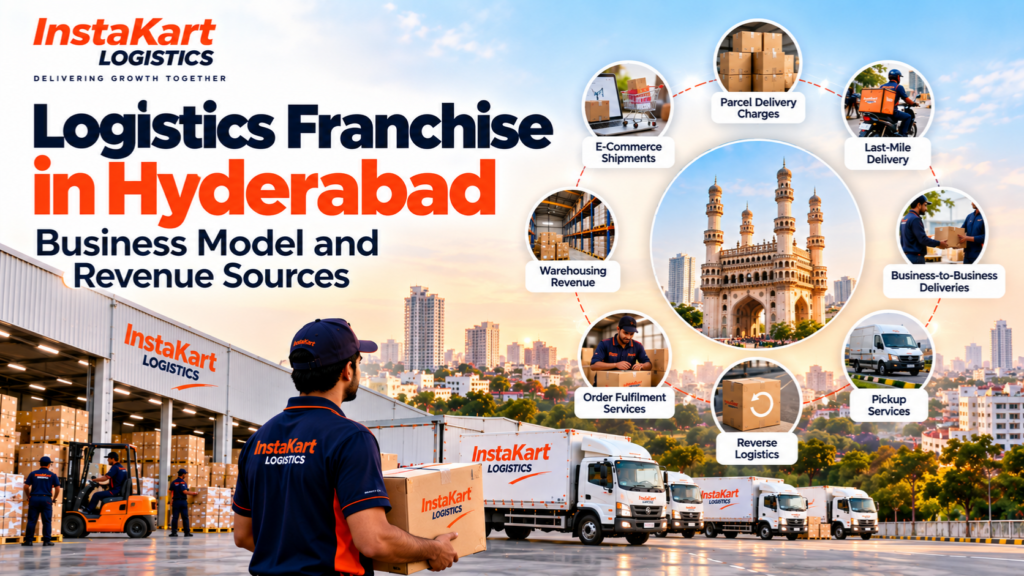
Logistics Franchise in Hyderabad: Business Model and Revenue Sources Hyderabad has become an important business and distribution hub for companies across Telangana and other parts of India. With the growth of e-commerce, online businesses, retail distribution, D2C brands, and local businesses, the need for reliable logistics services continues to increase. For entrepreneurs, this creates an interesting opportunity: starting a logistics franchise in Hyderabad. However, before investing in a franchise, it is important to understand how the business actually works. A logistics franchise is not simply about delivering parcels. It can involve pickup, transportation, sorting, warehousing, last-mile delivery, customer support, and technology-enabled tracking. More importantly, a franchise owner can potentially generate revenue through multiple logistics activities rather than depending on just one service. This guide explains the business model, major revenue sources, operating requirements, costs, and important factors to consider before starting a logistics franchise in Hyderabad. What Is a Logistics Franchise? A logistics franchise is a business model where an entrepreneur operates a logistics service under an established brand. Instead of building a logistics company completely from scratch, the franchise partner generally receives access to an existing brand, business model, operational processes, technology, and support system. Depending on the franchise model, the franchise owner may handle activities such as: Therefore, the exact responsibilities and revenue structure can vary from one logistics franchise to another. How Does a Logistics Franchise in Hyderabad Work? The basic business model is relatively straightforward. A customer or business needs to move goods from one location to another. The franchise acts as a local operational point that helps coordinate the movement of those goods. A typical process may look like this: Customer / Business → Pickup → Sorting → Transportation → Local Hub → Last-Mile Delivery → Customer For example, imagine a Hyderabad-based online clothing store receiving 100 orders from customers in different areas. The logistics franchise may collect the parcels from the seller, process the shipments, coordinate transportation, and ensure that the parcels reach the respective customers. In addition, the franchise may handle return shipments when customers request replacements or refunds. As a result, logistics franchises can become an important link between businesses and their customers. Understanding the Logistics Franchise Business Model The business model usually has three major components: 1. Customer Acquisition The franchise needs to bring businesses and customers into the logistics network. These could include: Building a strong local customer base is important because regular shipment volume can provide more predictable business than relying only on individual customers. 2. Logistics Operations Once customers start using the service, the franchise manages the operational side. This can include: Efficient operations are particularly important because delays can affect both customer satisfaction and business relationships. 3. Revenue Generation The franchise earns money through the logistics services it provides. Depending on the business model, revenue may come from shipment handling, delivery services, warehousing, fulfilment, business accounts, and additional services. Major Revenue Sources for a Logistics Franchise One of the biggest advantages of a logistics business is that there can be multiple revenue streams. Here are some of the common ones. 1. Parcel Delivery Charges Parcel delivery is one of the most straightforward sources of revenue. Businesses and customers pay for transporting parcels from one location to another. Pricing can depend on factors such as: For example, a business sending hundreds of parcels every month can become a valuable recurring customer for a logistics franchise. 2. E-Commerce Shipments The growth of online shopping has created a large requirement for delivery services. Local e-commerce sellers and D2C brands may need logistics support for: Therefore, developing relationships with online sellers can become an important part of a logistics franchise’s customer acquisition strategy. 3. Last-Mile Delivery Last-mile delivery refers to the final stage of the shipment journey, where a parcel moves from a local distribution point to the customer’s doorstep. This is one of the most important parts of modern logistics. For example: Warehouse → Hyderabad Distribution Point → Local Delivery Hub → Customer A franchise can participate in this final stage and generate revenue from delivery services. Because customers directly experience the final delivery, reliable last-mile operations can also help build long-term business relationships. 4. Business-to-Business Deliveries Not every logistics customer is an online seller. Many traditional businesses regularly need to transport products between: For instance, a manufacturer may need to send products to multiple dealers across Hyderabad and nearby locations. A logistics franchise can provide regular transportation and distribution support for such businesses. 5. Warehousing Revenue A logistics franchise may also generate revenue through warehousing services if the business model supports it. Warehousing can include: This creates an additional revenue opportunity because businesses may prefer to store products closer to their customers rather than managing everything from their own premises. Moreover, combining warehousing with delivery can create a more complete logistics solution. 6. Order Fulfilment Services Order fulfilment goes beyond simply delivering a parcel. It can involve: For online businesses, outsourcing these activities can save time and operational effort. Therefore, fulfilment services can become an additional opportunity for a logistics franchise that has the required infrastructure and systems. 7. Reverse Logistics Returns are a normal part of e-commerce. Customers may return products because of: The process of moving a product back from the customer to the seller is known as reverse logistics. A logistics franchise can earn revenue by handling these return shipments and related processes. In fact, businesses that have significant return volumes may specifically look for reliable logistics partners that can manage both forward and reverse movement. 8. Pickup Services Pickup services can also contribute to revenue. A franchise may collect shipments from: Regular pickup routes can become particularly useful when a business has consistent daily shipment volumes. 9. Corporate and Bulk Accounts Individual shipments can provide business, but corporate accounts can potentially provide more consistent volume. A logistics franchise can approach businesses that regularly send large numbers of shipments. Potential customers include: Instead of focusing only on individual customers, developing long-term B2B relationships can help

Logistics Franchise in Hyderabad: Business Model and Revenue Sources Read More »

Logistics Franchise in Hyderabad

Best Areas to Consider for a Logistics Franchise in Hyderabad

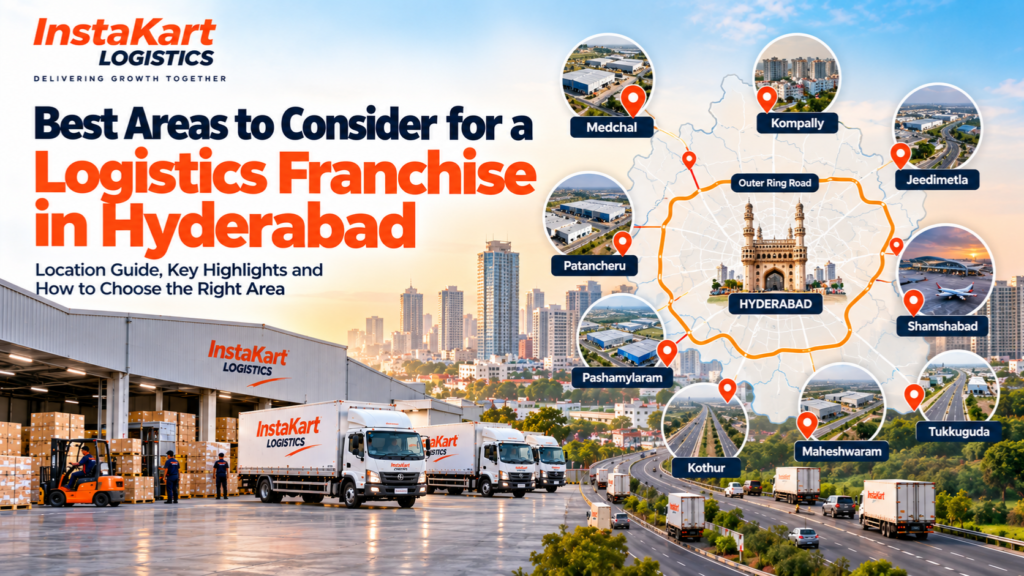
Best Areas to Consider for a Logistics Franchise in Hyderabad Choosing the right location is one of the most important decisions when starting a logistics franchise in Hyderabad. A good franchise model can provide operational support, technology, and an established business structure. However, even a strong logistics operation can struggle if its location creates unnecessary travel, traffic delays, high operating costs, or poor access to customers. Hyderabad is particularly interesting because its logistics activity is spread across several major corridors rather than being concentrated in one area. Recent warehousing research identifies three major clusters: Medchal in the north, Patancheru in the west, and Shamshabad in the south. So, which areas should an entrepreneur consider? The answer depends on the type of customers you want to serve, where your parcels are coming from, where they need to go, and whether your business depends more on city deliveries, industrial distribution, or airport connectivity. Let’s look at the major options. Why Location Matters for a Logistics Franchise A logistics business is different from many other businesses. A customer visiting a retail store might travel a few kilometres to reach you. A logistics business, on the other hand, may send vehicles across dozens of locations every day. That means your location can affect: For example, a franchise serving northern Hyderabad may benefit from being closer to the Medchal-Kompally corridor, while a business handling airport-linked shipments may find the Shamshabad side more practical. Therefore, the best location isn’t necessarily the most central location. It is the location that makes your particular delivery network efficient. 1. Medchal – A Strong Option for North Hyderabad Medchal is one of the most established logistics and warehousing corridors around Hyderabad. The area benefits from connectivity along NH-44 and access to the Outer Ring Road. The wider Medchal cluster includes locations such as Devarayamjal, Gundlapochampally, Kandlakoya, Yellampet, Shamirpet and areas extending beyond the ORR. Knight Frank Content Recent market data also shows strong activity in the northern submarket, with Jeedimetla and Medchal accounting for a significant share of Hyderabad’s industrial and warehousing activity. Why consider Medchal? It can be suitable for businesses handling: The location can also make sense for businesses serving northern Hyderabad and markets beyond the city. Who should consider it? Medchal may be particularly suitable if your franchise expects to handle larger shipment volumes or regional distribution rather than only small city-centre deliveries. 2. Kompally – Useful for City and North Hyderabad Distribution Kompally is another location worth considering when planning a logistics operation for northern Hyderabad. Its position along the northern side of the city makes it useful for businesses serving areas around Kompally, Suchitra, Secunderabad and nearby markets. The broader Kompally-Medchal corridor has long been associated with warehousing and distribution activity because of its connectivity to Hyderabad’s northern markets. Potential advantages Kompally can be considered for: For a franchise focused heavily on city delivery, being closer to the customer base can sometimes be more valuable than choosing a large warehouse farther away. 3. Shamshabad – Ideal for Airport-Linked Logistics If your business depends on air cargo, time-sensitive shipments, or southern Hyderabad distribution, Shamshabad deserves serious consideration. Shamshabad is located near Rajiv Gandhi International Airport and forms one of Hyderabad’s major logistics and warehousing clusters. The wider southern cluster includes Aerotropolis, Bongloor, Kothur and Shadnagar. The area’s airport connectivity can be particularly useful for businesses where shipment speed matters. Suitable for: However, proximity to the airport isn’t automatically an advantage for every business. If most of your customers are located in western or northern Hyderabad, choosing an airport-side location simply because it sounds strategic may actually increase daily travel. So, match the location with your actual shipment pattern. 4. Kothur – A Growing Southern Logistics Corridor Kothur is another location to consider in the southern logistics belt. It benefits from connectivity along the Hyderabad-Bengaluru highway and its relationship with the wider Shamshabad logistics cluster. Knight Frank includes Kothur within the major Shamshabad warehousing cluster. Kothur can be considered by businesses looking for: For entrepreneurs planning a business that may need more space as it grows, locations outside the core city can sometimes offer greater flexibility. However, you should compare the cost of the property against the additional distance to your customers 5. Patancheru – Strong for Western Hyderabad Patancheru is one of the major western logistics and industrial clusters. The wider cluster includes areas such as Rudraram, Edulanagulapally, Pashamylaram, Sulthanpur and Sangareddy. It is positioned along the Mumbai-Hyderabad highway corridor and has a strong industrial base. Why is Patancheru attractive? It can be particularly useful for businesses connected with: If your target customers are concentrated around western Hyderabad and industrial areas, Patancheru can potentially reduce unnecessary travel. It may also be worth considering if you expect to handle larger goods or business-to-business shipments. 6. Pashamylaram – For Industrial and Manufacturing Logistics Pashamylaram is part of the wider Patancheru-Sangareddy logistics cluster. Because of its industrial surroundings, it can be considered for logistics businesses serving manufacturing and industrial customers. Potential applications include: This type of location can be more appropriate for businesses whose customers are manufacturers rather than purely consumer-focused online sellers. Therefore, your customer profile should influence the decision. 7. Jeedimetla – Established Industrial Location Jeedimetla is another established industrial area in the northern part of Hyderabad. It can be relevant for businesses serving industrial customers, engineering companies, manufacturers, and B2B operations. The northern industrial submarket, including Jeedimetla and Medchal, continues to account for a significant share of Hyderabad’s industrial leasing activity. Jeedimetla may suit: For a franchise that needs access to established industrial customers while remaining relatively close to the city, this can be an area worth researching. 8. Maheshwaram – An Emerging Southern Option Maheshwaram is another southern location entrepreneurs can investigate, particularly if their business is connected with industrial activity and the airport-side logistics ecosystem. The broader southern and south-eastern corridors around Maheshwaram, Adibatla and the airport have seen increasing industrial and logistics development. Potential applications include: However, development can vary significantly from

Best Areas to Consider for a Logistics Franchise in Hyderabad Read More »

Logistics Franchise in Hyderabad

Logistics Franchise in Hyderabad: Investment, Benefits and How to Get Started

Logistics Franchise in Hyderabad: Investment, Benefits and How to Get Started Hyderabad has developed into a major business hub, with IT companies, retailers, manufacturers, e-commerce sellers, D2C brands, wholesalers, and service businesses operating across the city. As these businesses reach more customers, the need to move products efficiently from one location to another becomes increasingly important. This is where logistics comes in. For entrepreneurs looking to enter the logistics industry, a logistics franchise in Hyderabad can be one business model worth exploring. Instead of building a logistics company entirely from the ground up, a franchise allows you to operate within an established business structure and potentially receive support in areas such as technology, operations, branding, and training. However, starting a franchise is still a serious business decision. The investment, location, customer acquisition, operating expenses, staff requirements, and franchise agreement all need to be understood before you commit. Let’s take a practical look at how a logistics franchise works, what you may need to invest, the potential benefits, and how to get started. What Is a Logistics Franchise? A logistics franchise is a business arrangement where an entrepreneur operates a logistics service under an established company’s brand and business model. Depending on the franchise, the operation may involve: A typical logistics journey may look like: Business → Pickup → Sorting → Warehouse/Hub → Distribution → Customer The franchise partner may manage one or several stages of this process, depending on the company’s model. The important thing to remember is that every franchise model is different. Investment, territory, responsibilities, support, revenue structure, and operating requirements can vary considerably. Therefore, don’t make a decision based only on a franchise advertisement. Ask for the complete details and understand exactly what you are getting. Why Consider a Logistics Franchise in Hyderabad? Hyderabad has a diverse business ecosystem. From online sellers and retailers to manufacturers and distributors, many businesses need reliable ways to move goods. At the same time, customers increasingly expect convenient delivery and shipment updates. This creates a need for organised logistics operations that can connect businesses with their customers. For an entrepreneur, the attraction of the franchise model is that you don’t necessarily have to develop every part of the business yourself. Instead, you can potentially work with an established framework while focusing on the local operation and customer relationships. How Does a Logistics Franchise Work? Although the exact process depends on the company, a local logistics franchise may operate something like this: 1. Parcel Collection Shipments are collected from businesses or assigned pickup locations. 2. Sorting The parcels are organised according to destination, route, or service requirements. 3. Storage or Hub Processing Depending on the business model, shipments may temporarily move through a warehouse or local hub. 4. Route Allocation Shipments are assigned to appropriate delivery routes. 5. Last-Mile Delivery Delivery executives take the parcels to customers. 6. Delivery Confirmation The completed delivery is recorded through the company’s system. Technology can connect these stages, giving the business better visibility over shipments and daily operations. Logistics Franchise Investment in Hyderabad One of the first questions entrepreneurs usually ask is: “How much does a logistics franchise in Hyderabad cost?” There isn’t a single investment figure that applies to every franchise. The total requirement can depend on: Therefore, it’s important to look beyond the franchise fee. 1. Franchise or Onboarding Cost Some franchise companies charge an initial franchise or onboarding fee. Understand exactly what this fee includes before making any payment. 2. Office or Warehouse Depending on the model, you may need an office, delivery hub, warehouse, or a combination of these. Expenses can include: 3. Equipment Your operation may require: The exact requirements will depend on the services you provide. 4. Employees You may need delivery executives, warehouse workers, supervisors, customer support staff, and administrative employees. Employee costs should be included in your monthly financial planning. 5. Vehicles If your franchise involves pickup and delivery, transportation can become a significant operating expense. Consider: 6. Working Capital This is one of the most important expenses to plan for. A new business may take time to build a stable customer base. Therefore, you should have sufficient funds to cover regular expenses during the initial months. What Are the Benefits of a Logistics Franchise? A franchise doesn’t guarantee business success. However, it can provide a structured way to enter the industry. Established Business Framework Starting an independent logistics company means developing your own processes from scratch. A franchise may already have systems for handling shipments, customers, operations, and technology. For a first-time entrepreneur, this structure can make the learning process more manageable. Brand Support Building a new logistics brand takes time. Working with an established brand can give a franchise partner an existing business identity when approaching potential customers. However, local sales and customer relationships will still be important. Technology Modern logistics depends heavily on technology. Depending on the franchise, you may receive access to systems for: This can make it easier to monitor daily operations. Training First-time entrepreneurs may not have experience managing logistics operations. Franchise training can help introduce processes related to shipment handling, customer service, technology, and daily management. The actual training provided should be confirmed with the franchisor. Operational Support Some franchise models provide ongoing assistance with operations and troubleshooting. Before signing an agreement, ask exactly what support is included and whether any support services carry additional charges. Choosing the Right Location in Hyderabad Location is particularly important in logistics. You don’t necessarily need the most expensive commercial property. Instead, you need a location that makes operational sense. Consider: Road Connectivity Vehicles should be able to enter and exit the facility conveniently. Traffic A location with severe traffic problems can increase delivery time and fuel consumption. Customer Proximity Being closer to your target businesses and customers may improve operational efficiency. Parking and Loading Your facility should provide enough space for loading, unloading, and vehicle movement. Nearby Business Activity Commercial areas, retail clusters, industrial zones, and areas with many online businesses can provide

Logistics Franchise in Hyderabad: Investment, Benefits and How to Get Started Read More »