

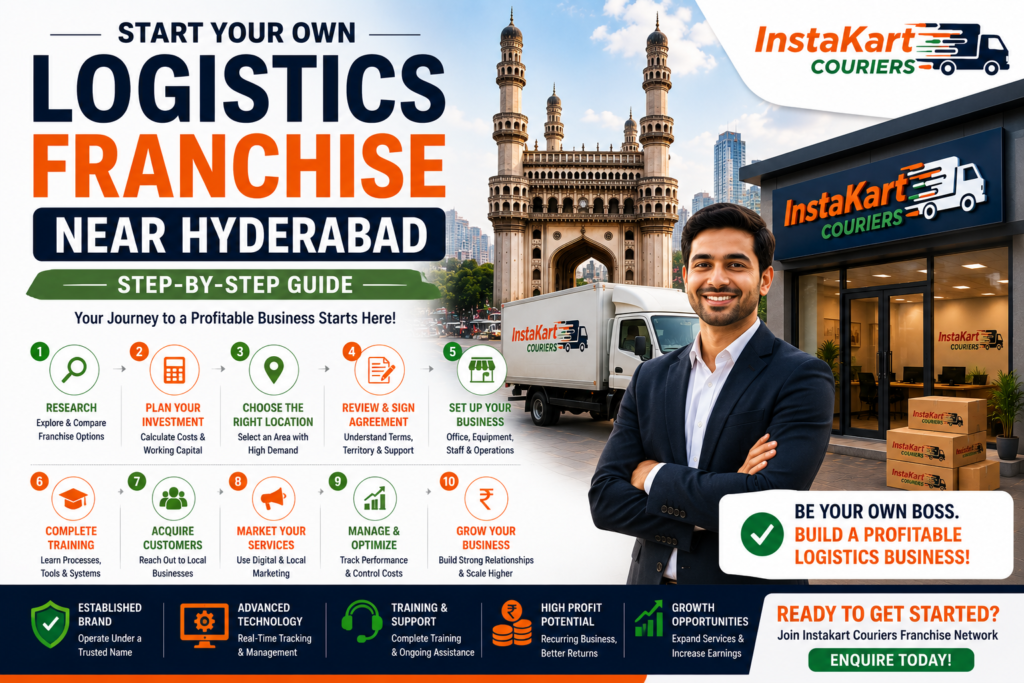
Start Your Own Logistics Franchise Near Hyderabad: Step-by-Step Guide
Start Your Own Logistics Franchise Near Hyderabad: Step-by-Step Guide Starting your own business is exciting, but choosing the right business model can be challenging. You want an opportunity with genuine market demand, manageable investment, and the potential to grow over time. If you’re considering a logistics franchise near Hyderabad, the courier and logistics industry is worth exploring. From e-commerce sellers and retailers to manufacturers and local businesses, many companies depend on reliable delivery services every day. A franchise model can make the process easier for first-time entrepreneurs by providing an established business structure, operational guidance, technology, and training. However, starting a franchise still requires careful planning. Here’s a practical step-by-step guide to help you understand the process. Why Start a Logistics Franchise Near Hyderabad? Hyderabad has become an important business and technology hub, with a growing mix of e-commerce, retail, manufacturing, healthcare, startups, and corporate businesses. All of these industries create logistics requirements. For example: This creates opportunities for logistics businesses that can provide dependable and efficient service. The opportunity isn’t limited to Hyderabad city either. Businesses and residential communities around the city’s expanding corridors can also create demand for local courier and delivery services. What Is a Logistics Franchise? A logistics franchise allows you to operate a courier or logistics business using an established company’s business model. Instead of building every process from scratch, the franchisor may provide support in areas such as: The exact support differs between franchise companies, so always check the terms carefully before investing. A franchise doesn’t remove business risk, but it can provide a more structured starting point for someone entering the industry for the first time. Step 1: Research Logistics Franchise Opportunities Don’t rush into the first franchise opportunity you see. Start by comparing different companies. Look at: Try to understand how the business actually works rather than focusing only on promotional claims. If possible, speak with existing franchise owners and ask about their experience. Step 2: Decide How Much You Can Invest Before choosing a franchise, create a realistic budget. Your investment may include: Franchise or Onboarding Charges Some companies may charge an initial franchise or onboarding fee. Office Setup You may need to spend on: Transportation Depending on the business model, you may require bikes, vans, or other transportation arrangements. Employees Budget for salaries, recruitment, and staff-related expenses. Marketing You may need money for local advertising and customer acquisition. Working Capital This is especially important for first-time entrepreneurs. Your business needs cash to operate while you’re building your customer base. Don’t spend your entire budget on the initial setup. Keep enough working capital available for day-to-day operations. Step 3: Choose the Right Location Location can have a major impact on a logistics business. You want an area that provides convenient access to customers, businesses, and delivery routes. Depending on your target market, you can research areas around: However, don’t select a location simply because it is popular. Instead, evaluate: A practical location can improve daily operations and reduce unnecessary travel. Step 4: Understand Your Target Customers Before opening your franchise, identify the customers you want to serve. Potential customers include: E-Commerce Sellers Online businesses can generate regular shipment requirements. Retailers Retail stores may need inventory movement and customer deliveries. Manufacturers Manufacturers often require transportation support for products and materials. Corporate Offices Companies may regularly send documents, samples, equipment, and parcels. Distributors Distributors can require frequent movement of products between businesses. Local Small Businesses Small businesses can become recurring customers when they need dependable courier services. Instead of trying to target everyone, identify the customer segments with the strongest demand in your chosen area. Step 5: Understand the Franchise Agreement This is one of the most important steps. Before signing, carefully review the franchise agreement. Pay attention to: If you don’t understand a clause, ask for clarification. For a significant investment, you can also consider getting professional legal or financial advice before signing. Step 6: Complete the Franchise Setup Once you’ve selected the franchise and completed the agreement, it’s time to set up the business. Depending on the franchise requirements, this may involve: Your franchisor should provide guidance on the required setup. Step 7: Get Proper Training Training is particularly valuable if you’re new to logistics. Learn how to handle: Don’t treat training as a formality. The better you understand the business, the easier it becomes to identify problems and make better decisions. Step 8: Start Building Your Customer Base Once your franchise is ready, focus on getting customers. Don’t wait for customers to discover your business automatically. Take the initiative. Visit local: Explain your services and show businesses how reliable logistics can help them improve their operations. Step 9: Use Local Digital Marketing Offline networking is useful, but don’t ignore digital marketing. Set up and optimize your Google Business Profile so potential customers can find your business when searching for courier and logistics services in your area. You can also use: Create content around searches such as: A strong local online presence can help generate enquiries over time. Step 10: Focus on Recurring Business Getting one-time customers is useful, but recurring customers can provide a more stable foundation. For example, an online seller shipping 20 or 50 parcels every week can potentially be more valuable over the long term than several occasional customers. Focus on building relationships with businesses that have regular logistics requirements. Offer: Good service can encourage repeat business and referrals. Step 11: Monitor Your Business Numbers Don’t manage your franchise based only on how much money comes into the business. Track your actual numbers. Important metrics include: This helps you identify where your business is performing well and where costs need to be controlled. How to Improve Logistics Franchise Profitability A logistics business can have good earning potential, but profitability depends heavily on efficient management. Control Operating Costs Monitor fuel, salaries, rent, maintenance, and other recurring expenses. Improve Routes Efficient delivery routes can reduce unnecessary travel and save time. Build Business Accounts Regular business customers can provide
Start Your Own Logistics Franchise Near Hyderabad: Step-by-Step Guide Read More »